


Sam Fender has handed over the full amount of his £25,000 Mercury Prize prize money to the Music Venues Trust, which operates to save the UK's grassroots music venues.
Fender was awarded the cheque on 16 October as his third album his work was named the best record of the last 12 months.
The musician has decided to donate the funds to the trust, in acknowledgment of the vital role local spots had in his initial steps.
"I personally couldn't be pursuing this success if it wasn't for all the shows I did around the area, and further afield, when I was starting out," remarked Fender. "These locations are iconic, but they are struggling."
Since the start of 2023, more than 150 of these spaces have permanently closed – about one-sixth of the entire UK sector.
Recently, top acts such as Pulp, the group Coldplay, Katy Perry and Ed Sheeran have all supported the Music Venues Trust in its attempts to help venues survive, by applying a small levy to their ticket costs, which goes to help local stages.
Fender also took part, raising more than £100,000 on his live tour to help numerous small stages across Britain.
The money helped spaces that were facing potential shutdown due to difficulties caused by floods, fires and personal losses, as well as permit problems, conflicts and neighbor objections.
Additional spaces obtained funding support in upgrading facilities and gear that helped performers and fans.
"The notion that revenue from concerts in large arenas backs the local stages, where it all starts for musicians like me, is just common sense," Fender has commented.
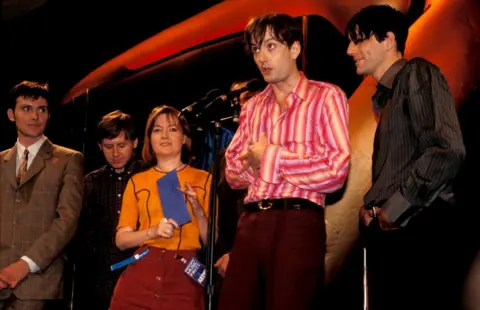
Fender is far from the only musician to donate his Mercury Prize winnings to good deeds.
In they earned the prize in the year 1996 for their record their work, frontman Jarvis Cocker stated that the group would give their cash to the organization War Child.
In 2002, musician the artist split her prize across a few good causes, including the NSPCC and a Sickle Cell organization.
"And I donated a grand to Highgate Newtown, to their gymnastics class, because I did gymnastics when I was growing up and they lacked updated gear," the artist told a publication.
Two years ago, they gave their prize money to the local youth club that nurtured their act, in addition to other independent music bodies.
Also winners that year they donated their prize to a charity for MS after a close contact was identified with the disease.
"Receiving the award was sufficient," remarked artist Small. "The prize was the cherry on top but we didn't need the bonus, because we had the honor. So our victory affected the lives of others."
Last week, the trust revealed it had saved several small stages in south-east England, by bringing them into public stewardship.
One venue in that area and the other in Bristol were acquired under the community ownership program, which is supported by a national body and supporters who acquire "shares" in the buildings.

